

The development of freeze dryer
With the development of freeze dryers, the principle of using ice crystal sublimation for dehydration has been proposed by scholars as early as the early 19th century.
In 1909, Shackell published a report on his freeze-drying experiments. The equipment used is a very primitive vacuum pump, salt and ice are used as refrigerants, and sulfuric acid is used as a desiccant. The obtained lyophilized products are a complement, antiserum, and rabies virus. A new era has been opened in the research and development of lyophilization technology for biological products.
In 1935, the first commercial freeze dryer was introduced. Flosdorf and Greaves have developed relatively complete freeze-drying instruments and equipment respectively, making freeze-drying biotechnology move from laboratory to industrialized production. Refrigeration technology + vacuum technology
Lyophile method: using cold traps to trap sublimated water vapor
Cochem method: trapping sublimation water vapor with inexpensive water-absorbing agents such as calcium sulfate
Divac method: use an aspirator to remove sublimated water vapor
In 1940, the mass production of freeze-dried human plasma and penicillin, the Second World War played a huge role in promoting the application of freeze-drying technology in the medical field. After the war, freeze-drying was rapidly expanded to various vaccines, medicines, and other fields. Until now, freeze-drying technology is still widely used in the field of pharmaceutical production.
Systematic research on freeze-drying foods began in the 1950s. In the 1960s, the world's freeze-dried food developed by leaps and bounds. The United States, Japan, Germany, the Netherlands, Denmark, and other countries have successively established their own food freeze-drying factories. At that time, among all freeze-dried foods that appeared in the European and American markets, coffee was the most successful. In Japan, freeze-dried instant noodles accounted for half of its entire instant noodle market, becoming the driving force for the application of freeze-drying technology.
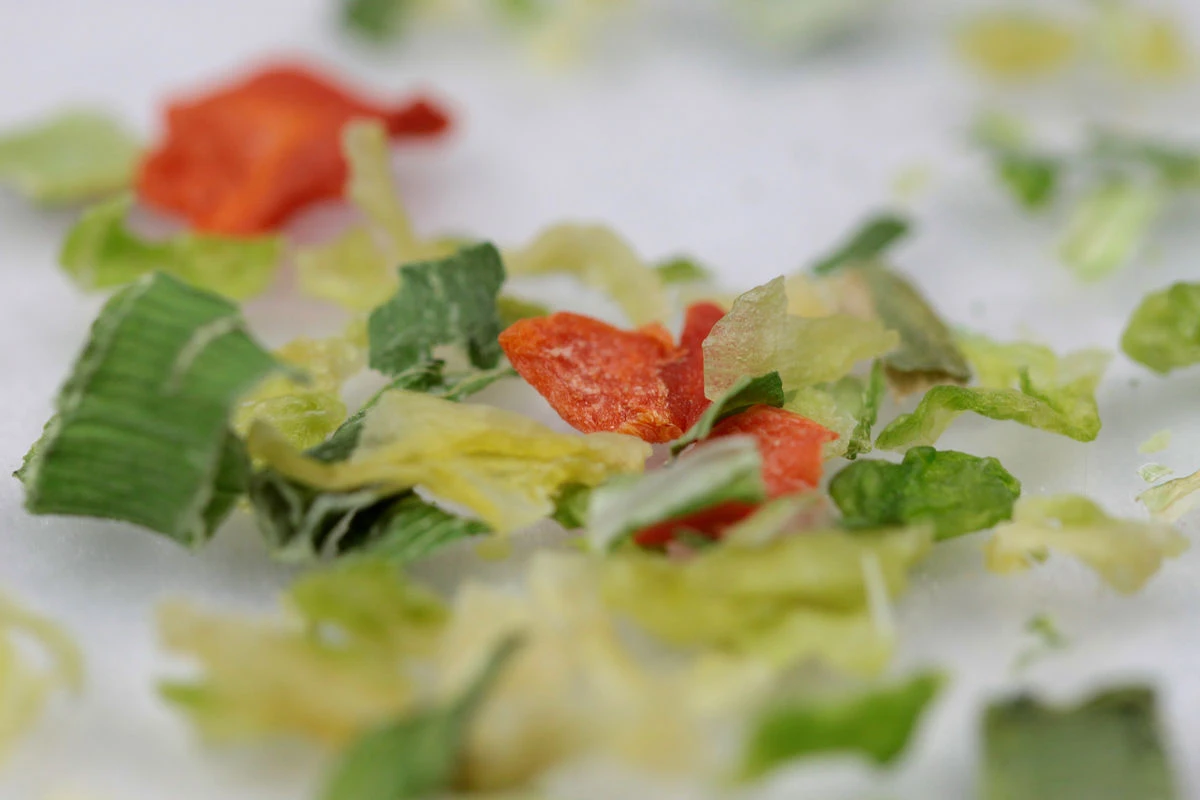
From the 1970s to the 1990s, FD fruit products (strawberries, cantaloupe); FD meat products (curry beef, assorted rice boards); FD condiments (instant noodle seasoning, tea);
Worldwide, freeze-drying technology has been widely used in synthetic food, vegetables, shrimp, fried food, meat sauce, matsutake mushrooms, fish, shellfish, meat processing and other industries.
From the 1990s to the present, freeze-dried preservation of microorganisms; manufacture of ultrafine particles (nanoscale).


